When to Set Deer Feeder Timer for the Best Daylight Deer Activity
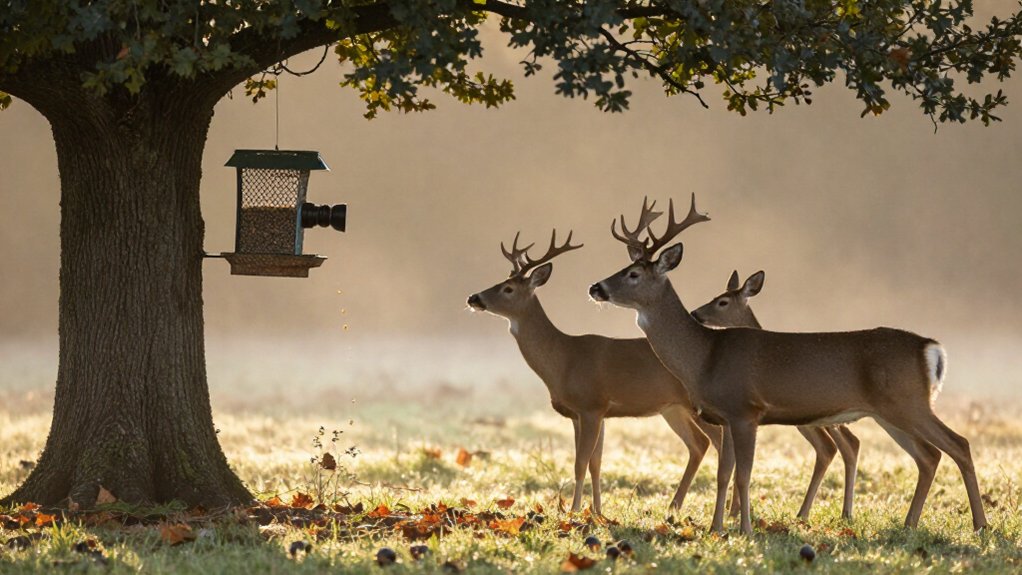
Set your feeder 15 to 30 minutes after legal shooting light, often near 7:00 to 8:00 a.m., and again 60 to 90 minutes before sunset. These windows align feed availability with post-dawn and pre-dusk movement while avoiding midday disturbance.
After cold fronts, delay the morning cycle 30 to 60 minutes and use camera data for 3 to 7 days before changing it further.
Confirm baiting rules, dates, and setback distances locally. More notes show how light, tracks, and health refine timing.
Daylight Timing for Private-Land Hunters
For private-land daytime hunting, program your feeder to fire shortly after legal shooting light begins, typically 15 to 30 minutes after sunrise, so deer can travel in and settle before the best morning visibility. This timing commonly falls near 6:45 to 7:15 AM and gives animals 5 to 20 minutes to respond before you expect movement.
Schedule a second cycle 60 to 90 minutes before sunset, often 3:30 to 5:00 PM; in Texas, 3:30 PM is a practical baseline. Fire each cycle at the opening of its window, rather than midway through it, because feed delivery initiates travel and feeding behavior. During hunting season, use only these morning and evening cycles. Skip midday dispensing: its sound and food pulse can redistribute activity, interrupting the quiet interval that supports daylight encounters and preserves movement.
Verify Local Baiting Regulations
Before you program morning or evening feed cycles, verify baiting rules with your state and local wildlife agency. Regulations differ sharply by jurisdiction, reflecting disease-control, harvest-management, and wildlife-concentration concerns. A lawful timer supports ethical hunting and reduces the risk that you unintentionally violate a closure or setback.
- Confirm what your agency defines as bait: corn, mineral, protein blocks, and similar attractants may be regulated differently.
- Match operation to legal dates; some places allow bait only during designated months or before particular seasons.
- Check required distances from roads, homes, and property boundaries, protecting neighbors and avoiding stressful enforcement encounters.
If guidance isn’t clear, contact the agency with your coordinates, feeder type, and proposed schedule. Save its response and your plan. Recheck rules before every season.
30-Minute Post-Dawn Schedule
A 30-minute post-dawn feeder run should begin 15 to 30 minutes after legal shooting light, often about 6:45 to 7:15 AM in fall, so deer arrive 5 to 20 minutes later rather than feeding during the strongest movement window.
Use this as arrival conditioning: deer leave bedding hungry after overnight inactivity, and the delayed sound lets their dawn travel carry them toward the field. In winter, move the trigger inward to about 7:30 to 8:00 AM, when shorter days and cover-oriented behavior can delay exposure. Test pressure responses by shifting it 30 minutes weekly until post-dawn arrivals emerge. Record sightings and entry routes to distinguish timing effects from disturbance.
| Field cue | What you picture |
|---|---|
| First light | Gray woods |
| Feeder starts | Brief grain scatter |
| Travel interval | Hooves through leaves |
| Arrival | Deer enter field |
Program 8 A.M. Corn Drop
Program an 8 A.M. corn drop to match post-dawn deer activity, especially during cooler seasons, while keeping it safely within legal shooting-light conditions. Adjust the timer as seasonal sunrise shifts, and limit feeding to a consistent morning and evening cycle to avoid competing cues.
Use trail-camera data to confirm visitation patterns and refine the schedule without adding midday drops.
Why 8 A.M. Works
At 8:00 AM, a corn drop aligns with the morning feeding ramp, when many deer are already moving and replenishing energy after overnight fasting. You place feed within an established movement period, rather than asking deer to abandon their daily rhythm. In fall, this earlier reward can precede the late-morning, roughly 11:00 AM feeding shift, helping animals learn that the site supplies predictable forage before competing food sources draw them elsewhere.
Run the schedule before season to condition deer: repeated feeder noise followed by corn builds an associative cue, which may reduce alarm responses versus introducing the sound abruptly. An 8:00 AM program can also produce steadier daytime use than evening feeding because cool morning temperatures often reduce heat stress and support foraging effectively.
Align With Legal Light
Set the morning timer 15 to 30 minutes after local legal shooting light, then verify that an 8:00 AM corn drop remains legal as sunrise shifts through fall. This timing places feed availability inside the early daylight period while avoiding a pre-legal attractant event. Deer commonly respond to predictable food pulses, but you shouldn’t dispense corn during the peak feeding window. Instead, start the drop at the legal-light threshold and let it run for five to 20 minutes. That brief lag allows animals to detect the feed and approach under observable conditions.
Confirm your jurisdiction’s definition of legal shooting light before programming the feeder; regulations and access rules differ by location. Pair the morning setting with an evening release 60 to 90 minutes before sunset to support daylight activity.
Adjust For Seasonal Sunrise
An 8:00 AM corn drop should move with seasonal sunrise rather than remain fixed on the clock. Deer activity follows changing photoperiod, temperature, and dawn conditions, so use sunrise as your anchor.
In spring and summer, begin near 7:00 AM, then shift the timer earlier or later as local dawn advances or recedes. During fall, place the drop in the first morning feeding peak, commonly 15 to 30 minutes after legal shooting light begins; in many locations, that means roughly 6:45 to 7:15 AM. In winter, limited daylight and later feeding can justify moving it toward 7:30 to 8:00 AM. Check local sunrise after seasonal changes, especially daylight saving time, and use trail-camera observations to confirm that corn lands during the active morning feeding window. Record changes in a log.
Limit Competing Feed Times
During hunting season, eliminate the separate 8:00 AM corn drop and concentrate feeding into two predictable activations: one 15 to 30 minutes after legal shooting light and one roughly 60 to 90 minutes before sunset.
An additional mid-morning feeding can alter travel routes because deer respond to food timing and location. By removing it, you reduce reinforcement for visits that overlap or precede the morning hunting window. Set the morning release near 6:45 to 7:15 AM when legal light supports that range; then preserve the evening release, often 3:30 to 5:00 PM in fall. This two-event pattern limits food-driven movement during quiet midday hours and focuses predictable use within huntable daylight. If hunting pressure changes behavior, move either activation only about 30 minutes per week toward shooting light; don’t restore competing drops.
Monitor Deer Camera Data
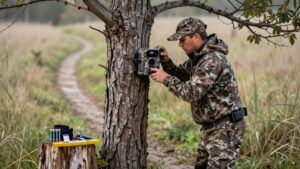
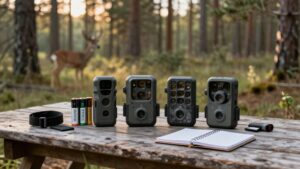
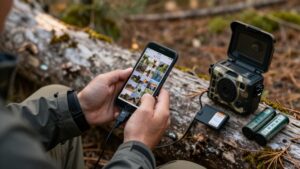
Program an 8:00 AM corn drop, then review the next 3 to 7 days of trail-camera footage to measure the actual feeding response. Record each deer’s arrival time, feeding duration, group size, and approach route, especially whether animals enter from the bedding-side cover. These observations identify your most consistent daytime feeding window and test whether a daybreak routine is occurring near bedding habitat.
Compare frames before, during, and after the drop: deer may remain at the feeder, feed briefly, or merely pass through once. Log temperature, precipitation, wind, and abrupt weather shifts, because cold or poor conditions can keep deer nearer bedding and delay or shorten visits. If the 8 AM drop produces repeatable daylight use, treat it as your baseline. Then adjust timing conservatively.
Shift Timing After Cold Fronts
Watch temperature and wind after a cold front, as deer often reduce movement and remain closer to bedding cover. Delay your morning drop toward the most reliable inward daylight window, often around 7:30 to 8:00 a.m. in winter conditions.
Reset evening feed to a shorter window about 60 to 90 minutes before sunset, rather than adding noisy extra cycles.
Watch The Temperature Drop
After a cold front produces a noticeable temperature drop, shift feeder times inward, later in the morning and earlier in the evening, because deer often reduce travel distance and remain closer to bedding cover. Monitor the post-front trend, not merely the front’s arrival. As temperatures continue falling, deer commonly conserve energy by limiting excursions from thermal and security cover. Retune the timer daily toward bedding-access periods.
In December through February, use roughly 7:30 to 8:00 AM and 3:00 to 3:30 PM, rather than fall’s broader windows. Don’t expect a feeding cycle about an hour before sunset to strengthen automatically: late-day movement can weaken under cold conditions. Keep feed available while daylight still supports travel, emphasizing the earlier evening window and other periods when deer are willing to move for nutrients.
Delay Morning Feed Times
Cold fronts often suppress early-morning travel, so delay your normal morning feeder cycle by about 30 to 60 minutes rather than running it near dawn. Use your standard schedule as a baseline, then shift the start later after frontal passage. Cooler, slower post-front conditions can keep deer close to bedding cover and reduce willingness to travel at first light. A later release better overlaps with rising solar radiation, when daylight warming may increase movement toward food.
Maintain a two-cycle program rather than adding daytime feed events. If camera observations and feeder use remain low, postpone the morning cycle another 30 minutes per week. This gradual adjustment lets you identify a repeatable window without creating erratic feeding cues or concentrating deer movement during needlessly biologically unproductive hours.
Reset Evening Feed Windows
Reset the evening feeder window earlier after a cold front, aiming for roughly 60 to 90 minutes before sunset to overlap with the first predictable movement from bedding cover. This timing aligns feed availability with post-front deer behavior: animals often conserve energy and remain near thermal cover until late afternoon. In Texas, begin near 3:30 PM; when cold keeps deer bedded longer, move cycle toward 3:00 PM.
Use one quiet evening run rather than extending feed into dusk, because harsh weather can suppress feeding intensity. Check trail-camera arrival times. If the feeder activates before deer leave bedding and activity shifts later, pull the schedule earlier in 30-minute increments. Keep the window anchored 60 to 90 minutes before sunset; refine it after cold fronts until daylight arrivals become reliable.
Fresh Tracks Before Noon
Fresh tracks before noon often indicate that your late-morning feeding pattern is drawing deer from nearby bedding cover, where they naturally rise to browse shrubs, acorns, and other soft mast around 11:00 AM. This sign suggests Feeding #2 aligns with localized movement rather than creating it. Set the feeder to begin at the window’s opening, allowing five to 20 minutes for deer to travel from cover.
During fall, maintain a daybreak Feeding #1 cycle, because it can funnel deer toward site before the late-morning visit. After hunting season opens, don’t add midday cycles; feeder noise can disturb movement. Check trail-camera images and track accumulation, especially from 9:00 to 10:00 AM. If arrivals shift, adjust the morning start time and verify the response across days.
Report Sick Deer Immediately
If you find a deer that’s down, stumbling, bleeding, unusually unresponsive, or unable to stand near a feeder, keep your distance and report it immediately through your state wildlife agency’s sick-wildlife channel or local non-emergency line.
Don’t approach, handle, or move the animal. Record the location, observation time, and signs; take photographs only from a safe distance. Submit these details promptly through the sick-wildlife channel, because responders can evaluate injury, disease risk, and humane intervention.
Early reporting supports surveillance and can limit exposure when infectious disease is possible. While awaiting instructions, don’t add feed or bait near the site, since concentrated deer contacts may elevate transmission opportunities. Follow agency guidance and keep people, pets, and other deer away from the area until officials arrive.
Avoid Overfeeding Near Bedding
Beyond disease precautions, feeder timing should protect bedding cover rather than turn it into a feeding destination. You want deer to leave sanctuary for a high-value meal, not learn that cover itself supplies food. Behavioral conditioning is strongest when feed arrives repeatedly near refuge habitat, increasing traffic and disturbance around beds.
- Set an evening cycle 60 to 90 minutes before sunset at a site away from bedding.
- Use one morning cycle 15 to 30 minutes after legal shooting time, beyond the bedding edge.
- Limit hunting-season feeding to these two events; midday firing can create a “dinner bell” and intensify route use.
About an hour before sunset, deer expand toward forage. In pressured areas, excess feed near cover may reinforce nighttime reliance, weakening travel patterns and eroding sanctuary security.
Check Camera Photos Weekly
Review trail-camera photos at least weekly to verify that deer are using your intended morning and evening feed windows rather than shifting their activity elsewhere.
Confirm arrivals 15 to 30 minutes after legal shooting begins and 60 to 90 minutes before sunset. Compare feed periods, emphasizing Feeding #3 one hour before sunset, to determine which schedule produces strongest movement. Record daybreak activity near bedding at Feeding #1 and use around 11 a.m. at Feeding #2; these patterns help you position stands and approach corridors without disrupting deer.
If visits decline or shift toward 10 p.m. to 3 a.m., don’t assume the timer remains effective. Relate changes to temperature, weather, and moon conditions, then recalibrate times from documented pattern. Records reveal whether feeding cues support daylight use or concentrate nocturnal traffic.
Conclusion
Set your feeder to support observation, not to force movement. After you confirm local baiting rules, begin with a small corn drop about 30 minutes after dawn, such as 8 a.m., and use weekly camera data to refine timing.
Cold fronts may shift visits later or earlier, while fresh morning tracks indicate use. Keep feed away from bedding cover, limit quantity, and report sick deer promptly. You’ll protect deer health and gather reliable activity data.
Deer Feeder Timer & Hopper Runtime Calculator
Enter your feeder timer settings and your own measured feed rate to get lb per feeding, lb per day, days between refills and a printable schedule.