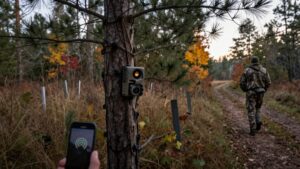
How Often Should You Check Trail Cameras Without Spooking Deer?
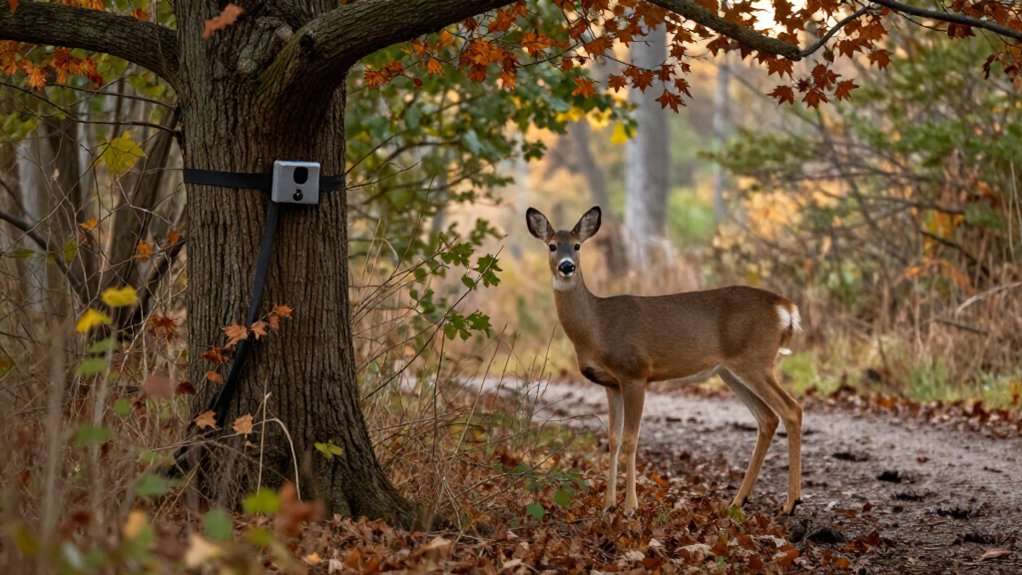
Check trail cameras about every 14 days, and extend intervals when possible to reduce repeated human intrusion.
Visit at midday or another low-activity period, using the same established route and keeping your scent cone away from bedding cover, feeding areas, and travel corridors.
Prepare cards and batteries beforehand, swap them quickly, and leave without scouting nearby sign. Rain or wind may mask noise, but they don’t make access harmless. Continue for timing, access, and battery strategies.
Mature-Buck Checks for Pressure-Aware Hunters
Mature bucks often reduce daylight movement after detecting repeated human intrusion, so camera checks should add as little pressure as possible. You should leave cameras deployed for the longest practical interval, because each SD-card swap introduces scent, sound, and visual disturbance that can alter use of nearby cover. If a camera sits near a stand, check it during your approach to a planned hunt instead of creating an additional visit.
Keep units outside bedding cover, targeting fringes of core areas and established travel corridors. Then leave them undisturbed until you return to hunt when feasible. Cellular cameras support this low-impact approach by transmitting images remotely and reducing physical checks. When you must visit a camera, move efficiently, avoid vegetation contact, and handle equipment quietly.
Wind Direction and Access Routes
Wind direction should govern every camera approach, particularly near bedding cover, because airborne human scent can alert deer before you reach the unit. Deer integrate odor, sound, and repeated disturbance, so consistent low-impact access reduces perceived risk.
- Check wind before leaving; don’t let scent enter bedding cover.
- Route your approach along fringes, avoiding beds, feeding areas, and trails.
- Reuse one quiet route to make disturbance spatially predictable.
- Pair camera retrieval with treestand entry, not a separate visit.
- Before thunderstorms, use rising wind, rain, and noise as masking conditions.
Such timing doesn’t erase disturbance, but it can dilute scent and conceal handling noise, helping you preserve bedding security and obtain less biased camera data from deer that continue using the site naturally after you leave.
Midday 14-Day Check Calendar
A 14-day midday check schedule limits repeated human intrusion while allowing you to monitor camera function and deer activity. Schedule visits near the middle of the day, when deer commonly show lower movement than at dawn or dusk. This timing reduces the probability that your presence overlaps peak feeding and travel behavior.
| Checkpoint | Your action |
|---|---|
| Day 14 | Inspect camera, power, and storage |
| Day 28 | Repeat only if access remains low impact |
| Exception | Check sooner for failure or urgent need |
Bring spare batteries, SD cards, and tools so you can finish in one brief visit. Wear gloves, avoid strong scents, and limit vegetation contact; odor and damaged plants can signal disturbance. Skip the interval when rain, saturated soil, or deer use makes access temporarily disruptive.
Approach, Swap Card, Exit Quietly
Choose a quiet route that limits vegetation contact, check wind direction, and time visits for low-activity periods such as midday. Bring spare cards and batteries so you can swap them efficiently without lingering near bedding or core-use areas. Exit along the same low-impact route, avoiding extra stops that could increase scent and disturbance.
Choose A Quiet Route
Treat each camera check as a low-impact access event: plan a route that avoids bedding cover and minimizes contact with surrounding vegetation, then assess wind direction before you move in so your scent is less likely to carry toward deer. Use established access corridors or field edges rather than cutting through cover. Repeated human intrusion can alter deer site use, especially near habitat.
Before leaving, organize a SD card and tools so you can complete the exchange efficiently. If the camera lies along your treestand route, service it during that trip instead of creating another disturbance event. At the camera, handle equipment quietly, avoid brushing branches or inspecting the area, and depart promptly by the same route. This limits noise and cumulative human cues.
Check Wind Direction
Before you commit to that quiet access route, check the wind and avoid approaching when your scent will drift into bedding cover, the camera’s immediate surroundings, or likely deer travel routes. Deer use olfaction to detect and interpret human odor, so wind can determine whether a brief visit changes local behavior. Approach from downwind whenever terrain and air movement allow, keeping your scent cone away from cover and established routes.
Treat your visit like a hunt: carry a card and tools before you enter, so you don’t linger. Limit contact with vegetation, because stems and leaves can retain and redistribute human scent. Leave quietly along the same low-impact route. When conditions permit, a pre-storm check may let wind, rain, and noise mask your presence.
Swap Cards Efficiently
Fold camera checks into trips when you’re already accessing a treestand for a hunt, rather than adding a separate intrusion into deer habitat. This consolidates human scent, sound, and ground disturbance into activity deer may already encounter. Approach on the favorable wind you identified, move deliberately, and avoid brushing vegetation that can retain odor or create fresh disturbance cues.
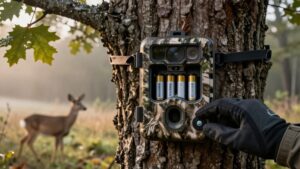
Carry a formatted spare SD card, batteries if needed, and the specific tool required for the housing. Open the unit, exchange the card, confirm it is seated, and close the camera without changing its aim or settings unless essential. Your goal is one clean, predictable pass through the site. In bedding cover and other sensitive areas, leave the camera in place for the season, reducing
Avoid Lingering Nearby
An efficient card swap only reduces disturbance if you keep the entire visit short and direct. Approach the camera quietly along the direct route, and don’t pause to scout, inspect sign, or move through adjacent cover. Each extra minute and each contact with vegetation can add sound, scent, and visual cues that deer may associate with human activity. Before you enter the area, organize replacement cards, batteries, and tools so you can retrieve the old card, complete only essential adjustments, and leave promptly.
Avoid spending time near bedding cover or other core habitat, where repeated encounters can increase wariness and alter use patterns. When possible, schedule checks during a low-disturbance period or combine them with a treestand access, reducing the number of separate intrusions.
Exit Without Disturbance
Plan your exit as carefully as your approach: check the wind, swap the SD card quickly, and leave along the same low-impact route without handling surrounding vegetation. Enter only when you’re already walking to a treestand for a hunt, avoiding an extra visit that compounds human pressure. Carry a spare card and tools you need, then complete exchange without testing settings.
Keep movements quiet; brushing stems or grasses can deposit scent and create disturbance deer detect. Near bedding cover, use wind direction to keep your odor from drifting into downwind resting areas. When conditions allow, time the check before a thunderstorm, because wind, rainfall, and noise can reduce detectability of disturbance cues. Don’t pause to inspect images in field; review them after you’ve left.
Rainy-Day Card Swap Timing
Use a rain break or steady downpour to swap cards when wind, rainfall, and ambient noise can reduce the detectability of your approach. Keep the visit brief with a spare SD card ready, and avoid brushing vegetation near bedding cover. Choose these weather windows only when they coincide with low deer activity and don’t create an extra trip.
Wait For Rain Breaks
Rain breaks can provide a lower-impact window for checking trail cameras because wind and residual precipitation may disperse or dilute airborne human scent. This doesn’t eliminate disturbance: deer can still detect ground scent, disturbed foliage, and unfamiliar movement. Before leaving cover, assess wind direction and choose an approach that keeps your scent from likely bedding or feeding areas.
Carry a formatted spare SD card, exchange it efficiently, and leave the site immediately rather than reviewing images there. Avoid touching vegetation or creating fresh trails, since contact can deposit odor that persists after rain stops. If a thunderstorm is approaching, a quick swap beforehand may use increasing wind and ambient noise to reduce detectability. Whenever practical, combine it with a hunt, limiting entries into cover.
Swap Cards During Downpours
A steady downpour can offer the lowest-impact timing for a trail-camera card swap, as rainfall, wind, and ambient noise may reduce the detectability of your movement and dilute airborne scent. Before you approach, check wind direction near bedding areas; rain doesn’t override a wind carrying your odor toward resting deer. Carry a ready-to-use SD card, exchange it, and leave without reviewing images.
Treat the route like a hunting approach: minimize contact with vegetation, avoid handling branches, and maintain your scent-control routine. Moisture and wind can disperse or suppress odor cues, but they don’t eliminate disturbance from tracks, touch, or presence. Use a rainy-day swap to combine maintenance with a trip you’d make. Don’t add visits simply because precipitation can mask your intrusion.
Prioritize Low-Traffic Windows
Schedule card swaps immediately before a forecast thunderstorm, when rising wind and approaching rainfall can reduce the distance at which deer detect footfall, vegetation noise, and airborne human odor. Use this low-traffic window as a risk-reduction tool, not a free pass. Check wind direction, wear clean clothing and boots, minimize scent, and don’t brush vegetation that can retain odor.
Carry formatted spare cards, charged batteries, and required tools, so you complete the exchange quickly. If you’re already walking to a treestand for a hunt, combine the check with that access route rather than making another intrusion. Keep cameras on travel-route fringes, away from bedding cover, and leave core-area units undisturbed longer, even in wet weather. Rain and wind reduce detectability; they don’t erase pressure.
More Daylight Buck Photos
More daylight buck photos usually come from reducing perceived human risk, not from checking cameras more often. Bucks adjust movement to repeated scent, sound, and visual disturbance, especially near secure cover. Place cameras on the fringes of bedding areas and travel routes, where you can collect information without entering a buck’s core bedding zone.
Check a camera when you’re already walking to a treestand to hunt, rather than making a separate trip. Keep each visit short: assess wind, avoid brushing vegetation, and leave minimal ground scent. A pre-storm check may help obscure some lingering odor and disturbance. For monitoring, 1 to 2-week checks reduce pressure; during season, adapt timing to deer activity and conditions. Cellular cameras, larger cards, long-lasting batteries, and solar power reduce visits.
Fresh Rubs Signal Stop Visits
Fresh rubs near a camera can indicate recent buck activity and should shift your priority from collecting images to limiting intrusion. This behavior suggests the animal may be repeatedly using nearby cover, so additional visits can deposit scent and alter its movements. If rubs occur beside a bedding or safety zone, don’t enter to retrieve images; leave the camera in place.
Align necessary checks with a planned approach to a nearby treestand, reducing separate disturbances. Move efficiently, avoid brushing vegetation, and assess wind direction before you enter. When conditions permit, wait for rain, rising wind, or noise before a thunderstorm, which may dilute scent and mask your passage. Fewer, better-timed visits protect the site’s perceived security while preserving data on local buck activity patterns.
Checking Cameras After Dark
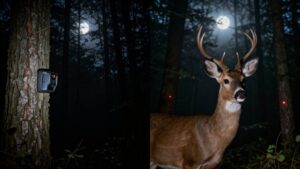
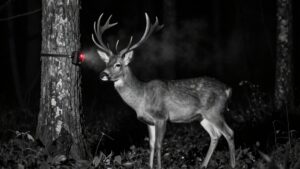
Checking trail cameras after dark doesn’t inherently reduce disturbance, as available guidance doesn’t establish that nighttime visits spook deer less than daytime checks. Deer respond to cumulative human presence, scent, and intrusion, so treat darkness as a logistical condition rather than a low-impact window. You can limit ecological pressure by:
- Check cameras only when you’re already walking to a treestand to hunt.
- Keep the visit brief and leave promptly.
- Carry replacement batteries and SD cards, preventing return trips.
- Set cameras along bedding-area fringes, not within bedding cover.
- If security requires frequent dark checks, secure and camouflage each unit.
This approach reduces repeated human cues across the landscape, although no evidence supports an after-dark schedule as a reliable method for avoiding deer disturbance in general.
Track Battery Drain Rates
Track each camera’s battery level and the date of every visit so you can estimate its drain rate and replace power before the unit fails. This record lets you predict service intervals from performance rather than guesswork. Note camera mode, trigger frequency, and weather conditions.
Motion-triggered units often consume power and fill storage faster than time-lapse models. Cold temperatures can also reduce available battery capacity, while seasonal vegetation or rut activity may increase triggers. Compare readings across visits to detect these changes and adjust your schedule before outages create data gaps.
Choose longer-lasting batteries or solar panels where conditions support them; both can reduce disruptive entries into deer habitat. Carry fresh batteries during planned treestand visits, allowing you to restore power without a separate trip.
Conclusion
You’ll protect mature-buck movement by treating each camera visit as a disturbance event. Check low-impact cameras about every 14 days, then shorten or pause visits when fresh rubs, daylight photos, or shifting winds indicate use. Enter only with favorable wind and quiet access, preferably during rain or midday, swap cards and batteries quickly, and leave the same way. After-dark checks can reduce visual detection, but scent and noise still matter. Your records guide adjustments.