Trail Camera Laws by State: Cellular Bans, Seasons and Public Land Rules
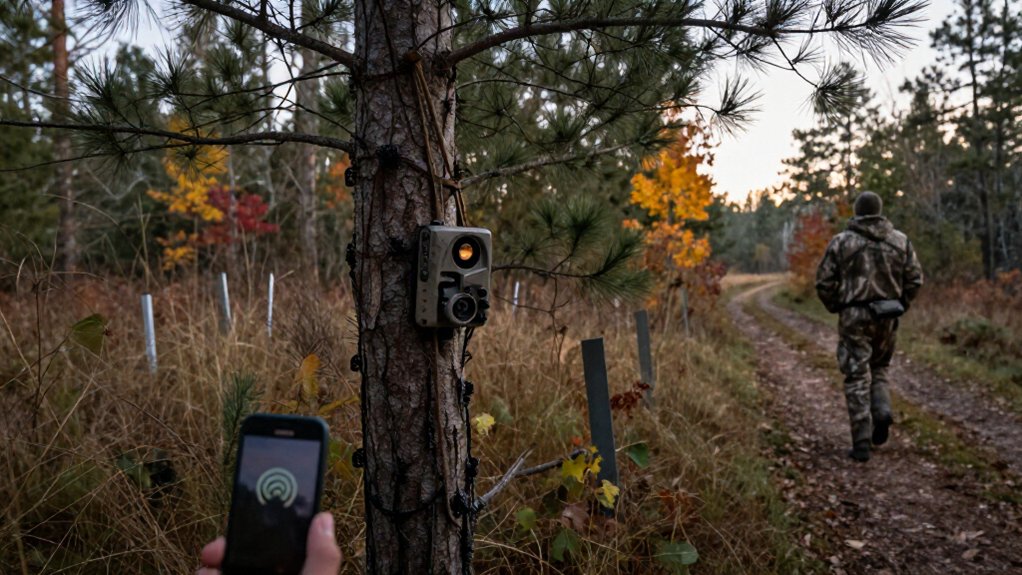
You must verify trail-camera rules by state before deploying or using images. Arizona bans hunting use of trail cameras; New Mexico bars cellular, Wi-Fi, and satellite cameras for remote big-game scouting, while SD-card cameras remain lawful.
Nevada and Utah impose seasonal public-land limits, and New Hampshire bars taking an animal the day you view its image. Public-land cameras may require owner identification. Check rules for transmission, dates, waterholes, baiting, and wildfire closures; state-specific rules follow.
Same-Day Image Restrictions
New Hampshire prohibits you from taking an animal on the same calendar day you view a game-camera image of it, even though you may use the image to locate or surveil game. You must wait until at least the next calendar day before taking that animal, subject to other applicable hunting rules.
Montana and Colorado also restrict certain real-time or same-day electronic assistance used to locate or take game, but their requirements aren’t interchangeable with New Hampshire‘s rule. Before relying on an image, verify the current regulation for your state, hunting area, species, and season. Determine whether the rule applies to your equipment and transmission method. If the text doesn’t clearly establish when you may hunt after viewing an image, contact the relevant wildlife agency or conservation officer before proceeding.
50-State Cellular Camera Rules
Cellular trail-camera rules differ sharply across all 50 states, and legality can turn on the camera’s transmission capability, the land where you place it, the species you pursue, and the date you use it. Arizona prohibits using any trail camera to take, or aid in taking, wildlife; Nevada bars cameras on public land August 1 to December 31. Utah’s big-game, cougar, and bear restriction runs July 31 to December 31, subject to listed exceptions.
| State | Core rule | Compliance action |
|---|---|---|
| New Mexico | Cellular, Wi-Fi, satellite ban for remote big-game hunting/scouting | Use SD-card cameras |
| Montana/Colorado | No real-time tracking; no transmitting cameras on public hunting areas | Confirm site designation |
Because technology, purpose, location, and dates control, you must check current agency rules before deployment and relying on images for a hunt.
Cellular Image Transmission Defined
When a trail camera sends photos or video over a cellular network to your phone, email, or online account, it uses cellular image transmission rather than storing files only on an SD card. States may regulate devices delivering remote, real-time or near-real-time images differently from conventional cameras retaining files locally. New Mexico prohibits cellular, Wi-Fi, and satellite cameras for remote big-game hunting or scouting under its cited rules, while traditional memory-card cameras remain lawful.
Before deployment, identify your camera’s transmission capability and consult current rules in the jurisdiction where you’ll use it. Confirm whether rules govern operation, image receipt, or use of transmitted information to locate or take game. Don’t assume an SD-card model receives identical treatment in every state, season, or hunting context.
Public-Land Camera Tagging Rules
When you place an unattended camera on public land, you must meet the state’s identification and contact-information rules. North Dakota requires a ground-readable tag listing your name, address, and phone number, while South Dakota and New Hampshire allow specified name-and-contact or customer-ID formats. Confirm whether the site requires a registration or permit number and whether an unmarked camera can trigger removal, citation, or other penalties.
Required Owner Identification
Public-land camera rules may require you to tag an unattended unit with identifying information that can be read from the ground. North Dakota requires every unattended trail camera to display a ground-readable identification tag. The state also provides an equipment-registration-number portal at gf.nd.gov.
In South Dakota, an unattended camera must identify the owner or user through one of the state’s permitted identification options, including an owner customer ID number. New Hampshire requires identification on cameras you place on public land or land you do not own. These obligations apply to unattended units; you shouldn’t assume that a label acceptable in one jurisdiction satisfies another jurisdiction’s rule. Before installation, verify the current rule for the public property, as agency requirements and site-specific restrictions can change.
Contact Information Standards
Contact-information requirements for unattended cameras vary by state, so you must use the format the applicable jurisdiction specifies. In North Dakota, your unattended camera’s ground-readable tag must state your name, address, and telephone number. You may also review the state’s equipment registration-number portal at gf.nd.gov for available registration information.
In South Dakota, display the owner’s or user’s name plus an address or telephone number; alternatively, display the owner’s name and customer ID number. If you place a camera on New Hampshire public land or other land you don’t own, identify yourself with your name and contact information. Vermont requires camera identification, but you should verify current agency regulations before relying on any particular label content. Keep information legible, current, and jurisdiction-specific at all times.
Tag Placement Requirements
Before mounting an unattended trail camera, place its required identification where a person can readily read it from the ground. In North Dakota, attach a tag that remains visible and legible without moving the camera; it must identify the owner by name, address, and phone number. South Dakota requires an unattended camera to display the owner’s or user’s name and either an address or phone number.
For cameras on New Hampshire public land or land you don’t own, position the label so it shows your name and contact information. Secure the tag against weather and vegetation, and inspect it after installation. Because rules vary by property and can change, verify current state and local requirements before deployment and retain records of your compliance annually.
Permit Number Display
Where a state recognizes a registration or customer number, you may use it only in the form its rules authorize. In South Dakota, an unattended camera may display the owner’s name and customer ID number instead of listing an address or phone number; make sure the displayed name identifies the owner. North Dakota requires an unattended trail camera to carry a ground-readable identification tag showing the owner’s name, address, and phone number. Although North Dakota offers an equipment-registration-number portal at gf.nd.gov, verify current agency instructions before treating a registration number as a tag substitute. In New Hampshire, cameras on public or other non-owned land must show your name and contact information; a number alone doesn’t satisfy that requirement. Check current site-specific rules before deployment.
Unmarked Camera Penalties
Failing to tag an unattended camera can expose you to enforcement under the rules that apply at the deployment site, even when you have permission to use the land. In North Dakota, you must attach a ground-readable tag listing your name, address, and phone number. South Dakota requires your name plus an address or phone number, or your name and customer ID number. In New Hampshire, cameras on public land or land you don’t own must display your name and contact information.
Vermont likewise emphasizes identification, landowner permission, and considerate placement. An unmarked unit may violate the applicable wildlife or land-management rule and can trigger removal, citation, or other enforcement where authorized. Before deployment, verify the current state, agency, and site-specific requirements.
Verify Agency Rule Dates
Trail-camera rules can change by regulation, so verify the current wildlife-agency rules for the state, season, and land you’ll use before deploying a camera. Read the agency regulations and land notices, rather than prior-year summaries. Match the restriction to dates and property involved: Nevada’s public-land window is August 1 through December 31, while Utah’s big-game camera restriction runs July 31 through December 31.
Determine whether the prohibition applies only to cellular transmission or also to SD-card cameras; Utah’s seasonal public-land rule can cover both. In New Hampshire, confirm the waiting-day requirement after you view an image before hunting that animal. If an effective date, seasonal window, or site application isn’t clear, contact the wildlife agency or a conservation officer before placement or use.
Emergency Retrieval During Wildfires
Wildfire evacuations and closure orders control access to your trail camera, and the available rules don’t establish a general emergency-retrieval exception, deadline, or waiver of seasonal restrictions.
If an evacuation order or land closure applies, you must comply with its terms. The information available here identifies no state-specific wildfire rule allowing you to enter a restricted area solely to retrieve equipment, extending a removal deadline, or suspending a camera season. Before attempting retrieval, check current orders for the relevant state, county, federal, or local jurisdiction and contact the managing land agency or wildlife agency. Don’t enter an active fire area or disregard evacuation instructions. Retrieve your camera only after authorized officials confirm that access is permitted and safe for the specific route and location.
Nevada Waterhole Camera Restrictions
Nevada generally prohibits the use of trail cameras on public land from August 1 through December 31, a restriction that may apply even to non-transmitting cameras. Because nearly 90% of Nevada is public land, you should treat this seasonal rule as a central compliance issue when scouting for big game.
Additional regulations may limit wireless transmission and require distance buffers around water sources in particular areas. These measures reduce the ability to receive timely animal-location information at scarce waterholes.
Before you deploy a camera, confirm current closure dates, water-buffer distances, transmission limits, and site-specific directives with the Nevada Department of Wildlife and the responsible land-management agency. Don’t assume a non-cellular unit is allowed. If conditions are stricter, remove or disable equipment promptly as required.
Confusing Baiting and Camera Rules
Camera restrictions and baiting prohibitions operate as separate legal rules, so you can’t infer that baiting is lawful merely because a camera is allowed—or vice versa.
Apply each state’s rules independently:
- In Utah, 2022 changes banned big-game baiting and restricted trail-camera use July 31 through December 31, subject to private-land, research, and agricultural exceptions.
- In Arizona, you may not use any trail camera to take or assist in taking wildlife, including by relying on scouting information that aids your hunt.
- In New Mexico, remote big-game hunting or scouting cannot use cellular, Wi-Fi, or satellite cameras; conventional cameras requiring physical memory-card retrieval remain lawful.
Verify rules for state, season, property, species, and camera type. Camera permission doesn’t authorize baiting; baiting rules don’t resolve camera legality.
Arizona’s Water-Source Camera Ban
Arizona prohibits using trail cameras to take or aid in taking wildlife statewide, including when you use camera-derived scouting information to plan or conduct a hunt. The 2021 rule isn’t limited to cellular or live-view cameras; you can’t rely on stored images or camera information to support your hunt.
- Don’t place or operate a trail camera for hunting purposes anywhere in Arizona.
- Don’t use images, locations, patterns, or other scouting results from a camera to plan, locate, or pursue wildlife.
- Review current Arizona Game and Fish regulations before deploying equipment or hunting, because enforceable wording controls.
The Game and Fish Commission unanimously adopted the prohibition over fair-chase concerns. Cameras concentrated at scarce water sources can reveal animal movements, increase disturbance, and create hunter conflicts.
Conclusion
Before you deploy a trail camera, check the current rule issued by the state wildlife agency and land manager for the exact unit, season, and purpose. You must distinguish camera placement from cellular image transmission, baiting, and water-source restrictions. On public land, follow tagging, identification, removal, and closure requirements.
In Nevada and Arizona, apply waterhole-specific limits carefully. During wildfire emergencies, seek agency direction before retrieval. Regulations change, so document your compliance in writing.