Why Do Bears Chew on Trail Cameras? Scent, Curiosity and Sound
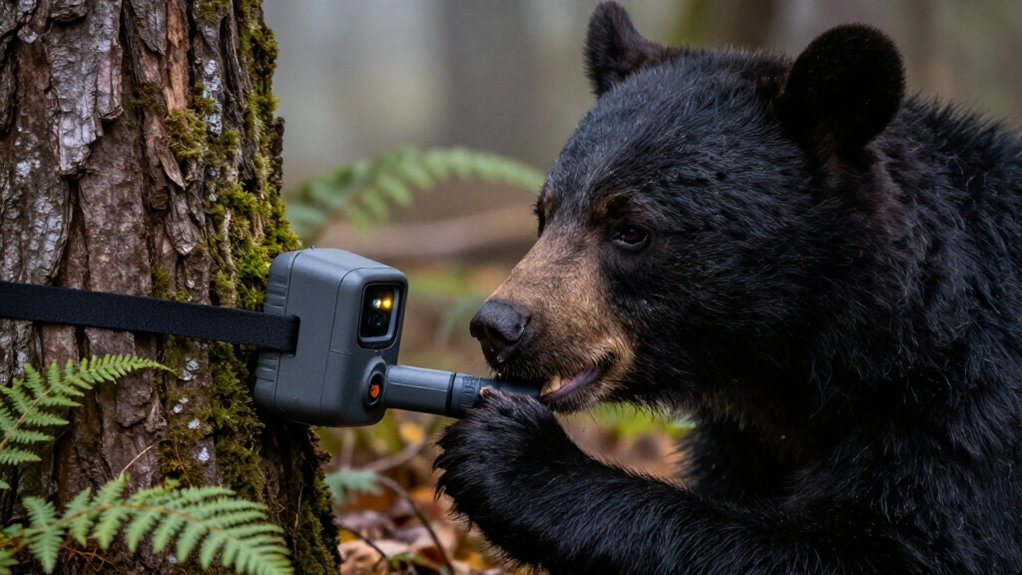
Bears may chew your trail camera because they smell salt, skin oils, food traces, or scented products left on its housing and straps. They also investigate unfamiliar boxy objects with their noses, paws, and mouths.
Infrared glow, clicks, and faint whirs can focus that curiosity, especially at familiar feeding or travel sites in bear-prone locations.
Bites commonly target corners, seams, cables, and straps, not random aggression.
The mounting details that matter most become clear below.
Salt Residue Attracts Bears
Bears often investigate trail cameras because salt and other human-derived residues can persist on their surfaces. When you install or service a unit, sweat, skin oils, glove residue, and material from pockets or field gear can transfer to its housing. A bear’s highly sensitive sense of smell can detect these traces at concentrations people would overlook.
Field observations show that bears commonly sniff, lick, and mouth objects carrying attractive odors. They may concentrate this testing around edges, straps, cable ports, vents, batteries, or exposed wiring, where residues accumulate or remain accessible. Repeated licking and chewing can then crack housings, loosen mounts, or damage components. You can reduce this cue by wiping the camera and attachments, limiting bare-hand contact, and thoroughly cleaning straps before deployment.
Infrared LEDs Trigger Investigation
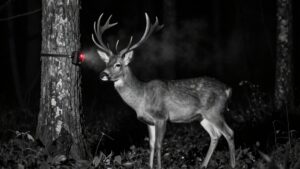
Beyond scent residues, a camera’s infrared system can provide a visual and mechanical cue that draws a bear closer. Even no-glow and low-glow LEDs may appear as faint red, eye-like reflections to a bear, especially at close range. If you place a camera on a frequently used trail, its activation can add a tiny glow and subtle filter movement. Observations support a straightforward sequence: the unfamiliar cue captures attention, and the bear approaches to assess the object with its senses.
| What you may notice | What a bear may detect |
|---|---|
| Low-glow LED | Faint red reflection |
| Camera activates | Brief light change |
| Filter shifts | Unfamiliar movement |
These cues don’t prove attraction in every encounter, but they can make a concealed device conspicuous. Reduce that chance when possible.
Bite Marks on Camera Housings
Bite marks on a trail camera usually indicate investigation rather than random aggression. When you inspect damage, look for punctures or paired impressions near seams, straps, cable openings, or antenna areas. Bears typically test unfamiliar objects with their nose, paws, and mouth, especially when the object doesn’t resemble bark or other natural surfaces.
Human odors can intensify this inspection: soap, sanitizer, sunscreen, food residue, fuel, detergent, or insect repellent transferred during setup may keep a bear’s attention. Faint clicks or activation whirs can also direct it to the device. After detecting an LED or infrared glow, a bear may move from staring to face-to-camera contact, then bite repeatedly. Distinct tooth marks thus document focused probing, not necessarily predatory or defensive behavior at that moment.
Trail Camera Casing Materials
When you use a plastic, boxy camera housing, its unfamiliar odor, container-like shape, and exposed seams or edges can prompt a bear to nose, paw, and bite it. You’ll usually see the worst damage at plastic corners, strap points, and antenna openings, where teeth can gain purchase. A steel security case better resists chewing and twisting forces, though you should still protect vulnerable seams and attachments.
Plastic Housings Attract Bites
Plastic trail-camera housings can attract bears because their boxy shape resembles hard food containers that may have yielded calories in past encounters. Even a clean unit can retain installation odors on enclosed, textured surfaces. You may transfer soap, sanitizer, lotion, sunscreen, food, or fuel residues during setup.
| Cue | Bear response | Likely interpretation |
|---|---|---|
| Boxy plastic | Sniffs | Possible container |
| Retained odors | Licks | Tests residue |
| Flexible corners | Bites | Explores texture |
| Unfamiliar form | Paws, shakes | Investigates object |
Observations support: odor draws attention; shape and texture sustain contact. Once a bear mouths casing, flexible corners offer chewable target. Repeated licking, biting, pawing, and shaking aren’t proof that your camera contains food; they show sensory testing. Reduce transferred residues before deployment, but recognize that an unusual plastic object can still prompt investigation.
Metal Cases Resist Damage
Steel security cases resist bear damage more effectively than plastic housings because they withstand repeated licking, biting, and sideways twisting without yielding at vulnerable corners. That strength matters when odors or operational sounds bring a bear close to investigate. When you use a steel cage, the housing is less likely to deform when teeth press on it or an animal shakes it.
The rigid enclosure helps keep camera body and sensors aligned. You can’t treat steel as a solution. Your mount must remain rigid, since loose straps, exposed accessories, or antennas can give a bear leverage to pry or move the unit. Bear-country installations pair steel boxes with cables and anchors. These practices show strength forms a barrier after curiosity turns into mouth contact.
Texture, Seams, and Edges
A steel case can resist crushing, but a bear’s investigation often begins at the camera’s texture and geometry. Unlike bark or stone, a trail camera presents hard plastic, rubber, seams, and abrupt contours.
You may see this testing behavior as licking, pawing, or mouth contact at corners rather than a single crushing bite. Boxy housings can resemble hard containers that bears have learned may hold calories, so they repeatedly work the same edges. Seams, cable-entry points, exposed lips, mounts, and strap junctions give teeth purchase; once a corner yields, biting can spread along the casing and open it. Shiny hardware also creates visual contrast at these junctions. If installation residue or human-associated odor collects in crevices, you’ll see persistent attention concentrated on those contact areas.
Food-Conditioned Bear Behavior
You may attract food-conditioned bears when your camera carries human-associated odors, such as food traces, lotion, or detergent. Bears often test unfamiliar plastic, rubber, and bait-like scents by sniffing and biting the housing.
If you place cameras along familiar feeding routes, bears can return repeatedly and target straps, corners, or antennas.
Associating Humans With Food
Why do some bears chew trail cameras rather than merely sniff them? A food-conditioned bear may have learned that human presence predicts calories. When you install a camera, you can leave scent traces from your hands, clothing, lotion, soap, sanitizer, pockets, or gloves. To a bear’s nose, even a clean-looking device can’t escape detection and may signal a possible human-associated reward.
Prior experience matters. Bears that have obtained food from coolers, bins, or plastic containers may treat a camera’s boxy housing as worth testing. Strong residues, including gasoline, insect repellent, or detergent, can reinforce that association. The bear may first sniff, then paw or bite. Chewing provides tactile and taste information, helping it determine whether the object fits a learned pattern of human-provided food.
Investigating Food-Like Odors
Food-conditioned bears often escalate from sniffing to chewing because unfamiliar camera parts can smell and feel like possible food containers. When you install a trail camera, residues from sunscreen, soap, sanitizer, fuel, bug spray, detergent, or food on gloves and pockets may persist on its housing. A bear’s highly sensitive nose can distinguish these odors from bark and vegetation, prompting close inspection.
Boxy plastic housings, locks, straps, and hard components may resemble items that previously held calories. You can expect an investigating bear to nose, paw, and mouth-test these surfaces. Biting often focuses on edges and accessories where odor concentrates. Although a camera seems silent to you, faint operating cues combined with scent can sustain testing, and gnawing may continue when the object fails to yield food.
Returning To Familiar Sites
Bears often revisit familiar locations that previously offered food or other rewarding stimuli, so a camera along a regular travel corridor or feeding area can become a repeated inspection point. If you install it with sunscreen, soap, detergent, gasoline, or food residue on your hands or gear, lingering odors may make that stop more predictable. Its boxy shape can also resemble a cooler, trash bin, or feed bucket, objects bears may associate with calories.
Activation clicks, faint whirring, or infrared glow can provide additional cues. Repeated visits don’t necessarily indicate aggression: at a habitual site, a bear may lick or rub the housing, then test manipulable corners and straps with its teeth. Cleaning equipment, using unscented gloves, and avoiding handling reduce, but don’t eliminate, inspection behavior.
Mount Cameras Above Bear Reach
Mount trail cameras about 8–10 feet (2.4–3 m) above ground, rather than the typical 4–5-foot deer-height position, to keep the housing, straps, and antennas beyond most bears’ reach. Height exploits bears’ usual smell-and-touch investigation zone, limiting access to chewable plastic and exposed hardware. Angle the camera downward; this also makes it less conspicuous and can reduce repeated approaches.
| Setup | What you observe | Practical result |
|---|---|---|
| 8–10 ft | Fewer paw contacts | Less chewing |
| Downward angle | Camera is less visible | Fewer returns |
| Rigid trunk | Straps stay tight | Stable aim |
Choose a rigid trunk rather than a narrow, flexible one. Flexing can loosen straps and shift aim when a bear pulls.
High placement isn’t protection, but it is a first layer: if an animal reaches the unit, twisting or antenna damage becomes more likely.
Tree-Climbing Defeats High Mounts
Even at 8 to 10 feet, a trail camera isn’t out of reach when a bear climbs the supporting tree. Height still reduces easy access to the housing and trigger area, but it doesn’t reliably prevent investigation. As the bear ascends, its nose detects surfaces unlike bark, and curiosity can progress from sniffing to pawing, licking, or biting. Flexible straps, narrow gaps, and protruding hardware provide contact points. You’ll see damage concentrated on these functional parts rather than randomly distributed.
Antennas, loose cables, battery doors, and mounting brackets are particularly exposed: a bear can grab or chew them while climbing. That force bends straps, shifts the camera’s viewing angle, or twists its housing off-axis. A high mount thus limits ground-level access, not a climbing bear’s reach.
Bungee Cords Invite Bears
Unlike a rigid bracket, a bungee cord gives a bear an easy-to-grab, flexible point of contact. Field observations suggest that this elastic attachment turns your camera into a manipulable object rather than a fixed obstacle. When a bear tugs, the cord stretches, shifts the housing, and reveals edges and straps that invite further mouth testing.
- Your handling can leave human odor on the cord, prompting repeated sniffing, licking, and biting.
- Cord recoil and housing movement create a changing puzzle, increasing contact with corners, antennas, and straps.
- Vibration can help a bear pinpoint faint operating noises or LED glow, then investigate the apparent source.
- Reachable mounting height and exposed hardware let a bear maintain grip, twist the unit off target, and damage vulnerable parts directly.
Use a 3/8-Inch Steel Cable
A 3/8-inch steel cable gives your trail camera a substantially more bite-resistant tether, limiting how far a bear can pull, shake, or twist the unit during investigation. Bears often detect trace soap, sanitizer, food, or fuel on your gloves, then progress from sniffing to pawing, biting, and shaking. Route cable through housing and around a solid tree, so repeated force cannot enlarge weaknesses in straps, mounts, or antenna attachments.
| Bear behavior | Cable response | Practical result |
|---|---|---|
| Pawing | Restrains travel | Less mount stress |
| Biting | Resists severing | Camera stays attached |
| Shaking | Limits twisting | Antennas avoid leverage |
This restraint doesn’t eliminate curiosity, but it increases the time and force required to dislodge the setup. That delay matters: bears commonly abandon an object after testing it. Avoid thin straps.
Conclusion
Your trail camera can attract bears through salt residue, unfamiliar odors, infrared activity, and sounds that prompt investigation. You’ll often see bite marks because bears test hard plastic housings with their mouths, especially when food conditioning increases persistence.
Mounting higher reduces access, but it won’t stop climbing bears. Avoid bungee cords, which invite pulling, and secure units with a 3/8-inch steel cable. These steps don’t eliminate encounters, but they limit camera damage in bear habitat.