Moultrie vs Tactacam: Which Cellular Camera Is Better for Hunters?
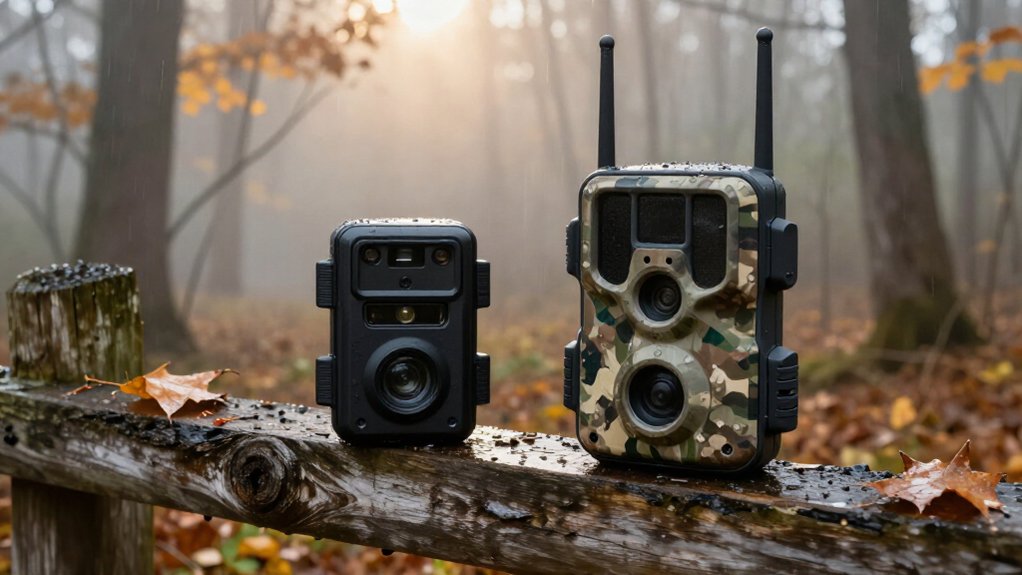
Choose Moultrie Edge 2 Pro if you want sharper still photos, AI filtering, and efficient image delivery in a proven coverage area.
Pick Tactacam Reveal 3.0 if discreet No-Glow night coverage and multi-carrier auto-connect matter more, especially across changing hunting properties.
You’ll still need to field-test both cameras on your final trail setup, because signal, mounting angle, and night distance determine usable results.
Compare setup, plans, security, warranties, and real-world flash performance next in detail.
Moultrie Edge vs Tactacam Reveal
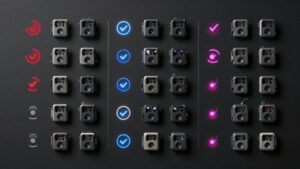
When you compare Moultrie Edge 2 Pro with the Tactacam Reveal 3.0 line, you’re choosing between image-detail priority and connection flexibility. Choose Edge 2 Pro when you want maximum still-image resolution and AI filtering in one ready-to-buy system. Choose Reveal 3.0 when your hunting ground demands multi-carrier auto-connect behavior inside the Reveal ecosystem.
| Focus | Better fit |
|---|---|
| Detail | Edge 2 Pro |
| Connectivity | Reveal 3.0 |
| Custom builds | Willfine |
In the field, that split matters. You’ll favor Moultrie for crisp identification and streamlined retail setup. You’ll lean Tactacam when carrier adaptability outweighs resolution.
Reveal keeps night coverage invisible through its ecosystem, while Edge targets detail. If both fixed packages miss your needs, Willfine lets you tailor cellular, IR, and app reporting for your hunting style and terrain.
Edge and Reveal Photo Delivery
Photo delivery is where the Edge 2 Pro’s resolution-first approach and the Reveal 3.0’s No-Glow night focus show up in daily hunting use. If you want to study antler detail from stills, Edge 2 Pro puts image resolution first. Its 4G LTE connection sends photos directly into Moultrie’s app ecosystem.
Reveal 3.0 sends images through the Reveal app over 4G LTE, but its advantage is discreet nighttime coverage. No-Glow illumination helps you monitor nocturnal deer without visible light disturbance. In either system, arrival speed and consistency depend on local carrier service and your data plan. Processing and AI filtering can trim file sizes and cut unwanted images, helping delivery stay manageable. Choose Edge for maximum still detail; choose Reveal when night-photo performance matters most.
Trigger Speed and Detection Range
Trigger speed and detection range matter most at the edge of a deer’s travel lane, where a camera has only seconds to recognize movement and capture the animal before it leaves the frame.
Moultrie Edge 2 Pro leans toward high-confidence AI filtering, which can cut down on triggered but unhelpful images when deer move through clutter. Tactacam Reveal 3.0 cameras earn attention for consistent cellular-ready performance and night capture as light fades.
Still, real-world results shift with temperature, animal speed, sensor sensitivity, and your mounting angle. Test each camera on the final 10 to 30 feet of your usual trail, where deer exit the frame. Compare day and night passes: which unit detects deer sooner and delivers more complete captures? The answer matters more than specs.
QR-Code Setup and App Sync
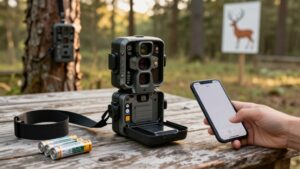
How quickly you can pair a camera in the field often decides whether it’s hunting that evening or riding back home in the truck. With both the Moultrie Edge 2 Pro and Tactacam Reveal 3.0, you’ll scan the camera’s on-device QR code through its dedicated app, not the competitor’s, to connect it to your account. The app then guides you to confirm the plan and finish activation.
In practical setup, neither system is truly done until the first photo uploads. Give the camera time in a spot with steady signal, then watch the app for pairing confirmation before you leave the property. If sync stalls, don’t assume failure. Verify that you scanned the correct QR code and rerun activation in its app to restore the link.
Carrier Coverage by Hunting Area
Carrier coverage matters more than the logo on the camera when you’re deciding between the Moultrie Edge 2 Pro and Tactacam Reveal 3.0. Both use 4G LTE, so field performance hinges on the towers and bands reaching your stand, not the signal near town. Check carrier maps at the exact property, then test the location if you can. Dead pockets create delayed uploads and missed check-ins with either camera.
Tactacam usually has the edge when you hunt several properties or travel, because its multi-carrier auto-connect can find the strongest available signal. Moultrie’s retail setup is more fixed, so coverage can vary as you move. In fringe LTE country, one extra bar can make photo delivery far more dependable. Match your camera to real trails.
Monthly Plan and Battery Costs
Monthly cost comes down to how many images or videos you send, not just whether you choose the Moultrie Edge 2 Pro or Tactacam Reveal 3.0. Both use managed 4G LTE plans, so your tier and transmission volume drive the bill. Moultrie bundles often give you predictable out-of-box monthly spending, while Tactacam plans similarly scale with the image or video allowance.
In the field, you’ll save more by matching the tier to actual trail activity than by chasing a brand. Set trigger mode, image count, and report cadence conservatively when a spot gets busy. That reduces plan burn and limits battery drain.
Expect more battery replacements when captures and transmissions climb, temperatures drop, or signal conditions work the camera harder. Check usage regularly and adjust.
Theft Exposure and Mounting Security
Theft risk is similar with the Moultrie Edge Pro and Tactacam Reveal lineup: either camera can disappear quickly if you rely on its retail mount alone. In the field, treat both as theft-prone and upgrade the installation, not just the camera. A hardened lockbox, anti-tamper screws, and a mount that shields bracket fasteners make a bigger difference than brand choice.
Position the unit where thieves can’t easily grab leverage or reach connection points. Enclose any external cables and block access to the SIM area so a quick disconnect won’t defeat your setup. During an outage, fast check-ins and dependable local 4G coverage can alert you sooner, though results vary by property. Willfine-style options let you tailor enclosures and mounting hardware to your site’s demands.
Warranty Terms and Support
Before you hang either camera on a remote ridge, compare Moultrie’s and Tactacam’s warranty length, exclusions, and coverage for LTE, antennas, and power components. You’ll also want to test how quickly each brand’s portal, phone, or email support gets you from a dead camera to a workable fix or replacement.
Strong firmware updates and clear troubleshooting resources matter when carrier or app changes interrupt your image delivery mid-season.
Warranty Coverage Comparison
Warranty can matter as much as image quality when a camera fails mid-season. Both brands offer limited manufacturer coverage, but you shouldn’t assume an Edge 2 Pro and a Reveal 3.0 carry identical terms. Compare the exact model and package before you hang either unit over a scrape.
- Coverage length: Verify the stated period for your specific camera; terms can vary within both lines.
- Exclusions: Read limits for weather damage, misuse, and unauthorized modifications. A flooded camera or altered housing may not qualify.
- Claim route: Moultrie Edge warranties commonly run through the retail channel, which may shape replacement or repair timing.
- Purchase record: Tactacam Reveal 3.0 claims typically connect to original purchase details, so keep your receipt and buy authorized.
Tactacam needs receipts; Moultrie uses retailers.
Support Access And Resources
Support quality determines how fast you can get an Edge or Reveal camera back in the field when activation, signal, or firmware issues show up. For either brand, start with its manufacturer ticket system, documentation, serial number, and proof of purchase, not the retailer.
Compare Moultrie and Tactacam on response tools: firmware-update speed, app-pairing walkthroughs, SIM or data-plan activation help, and signal or latency troubleshooting. Before buying, read the warranty wording and box details for coverage of power, electronics, and connectivity parts; field-damage exclusions can vary by model. Also check return terms for the camera or camera-plus-plan bundle, since options may differ.
If your hunting property needs a carrier or plan change, confirm each company’s end-to-end support. Fixed setups may limit your flexibility.
Night Flash Range Compared
In field use, you’ll see night flash distance shift with mounting height, trail angle, and cover, not just the No-Glow label. Moultrie’s Edge 2 Pro can give you finer detail near the edge of illumination, while Tactacam Reveal 3.0 prioritizes discreet no-glow coverage for nocturnal movement.
Test both at matched distances on your setup, because detection range can exceed the distance where you’ll receive a clear, useful image.
Infrared Flash Distance
Night flash distance matters most when a buck hangs up beyond the bait site or trail’s center line. Tactacam Reveal 3.0 cameras appeal if you want an invisible, no-glow setup, but no-glow configurations can sacrifice throw compared with stronger IR designs. Moultrie Edge 2 Pro’s stated range deserves the same scrutiny: don’t confuse detection distance with actual illumination.
- Check whether each brand lists no-glow, low-glow, or IR flash range.
- Match test conditions: full darkness, target size, distance, and sensitivity.
- Expect usable distance to shrink on small deer, dark hides, brush, and open-field edges.
- Test both cameras where you hunt; reflective cover and your typical shot zone reveal which flash reaches farther.
Treat specs only as starting points, not stand-placement guarantees.
Night Image Clarity
Flash range only tells part of the story; night image clarity shows whether you can actually identify a buck at the edge of that illuminated zone.
Tactacam’s Reveal cameras use invisible No-Glow coverage, often preserving usable low-light scenes when you’re judging antlers and travel direction. Moultrie counters with higher-resolution stills and AI false-trigger filtering, so nighttime photos reaching your phone may be cleaner and more relevant.
Don’t choose from advertised range alone. Compare each model’s nighttime flash effectiveness at your camera-to-deer distance and note its night mode. A longer claim doesn’t help if exposure falls off before you can confirm the animal. Also weigh transmission: a sharp still delivered efficiently beats a better-looking image that arrives degraded. Test both first on your trail setup.
Detection Range Limits
Although detection range helps determine where you place a camera, it doesn’t tell you how far either model can illuminate a deer after dark. Neither manufacturer provides a verified night-flash distance for the Moultrie Edge 2 Pro or Tactacam Reveal 3.0, so you can’t make an honest yard-for-yard call. Tactacam promises invisible No-Glow coverage.
- Treat flash range and detection range as separate field decisions.
- Check exact model specifications before choosing a trail, feeder, or scrape setup.
- Compare flash modes: No-Glow, Low-Glow, and color night vision illuminate differently.
- Test your camera at your intended distance; brush, angle, and reflective ground can shorten usable reach.
That practical check prevents missed nighttime deer and makes either camera’s placement more dependable.
Best for Multi-State Hunters
For hunters running cameras across state lines, the Tactacam Reveal 3.0 has the edge because its multi-carrier auto-connect can help it find usable service as coverage changes from one property to the next. That flexibility matters when your Illinois lease, Missouri farm, and Wisconsin timber each favor different networks. Rather than swapping cameras or accepting dead spots, you give Reveal 3.0 a better chance to stay connected as you travel.
Before committing, check coverage and plan terms at every property; both brands rely on fixed hardware, apps, carrier arrangements, and data plans. If you need carriers, regional bands, or custom data structures, Willfine’s custom program offers tailored options.
Conclusion
If you hunt one property, Tactacam Reveal gives you reliable photos, fast setup, and strong carrier options. If you run multiple cameras across states, Moultrie Edge makes more sense with auto-connect coverage and easy app management. You’ll get solid trigger speed and night performance from both, but placement and theft protection matter more in the field. Choose Reveal for proven simplicity and Edge for flexible nationwide scouting that keeps your cameras connected.